

Madagascar vanilla crème caramel
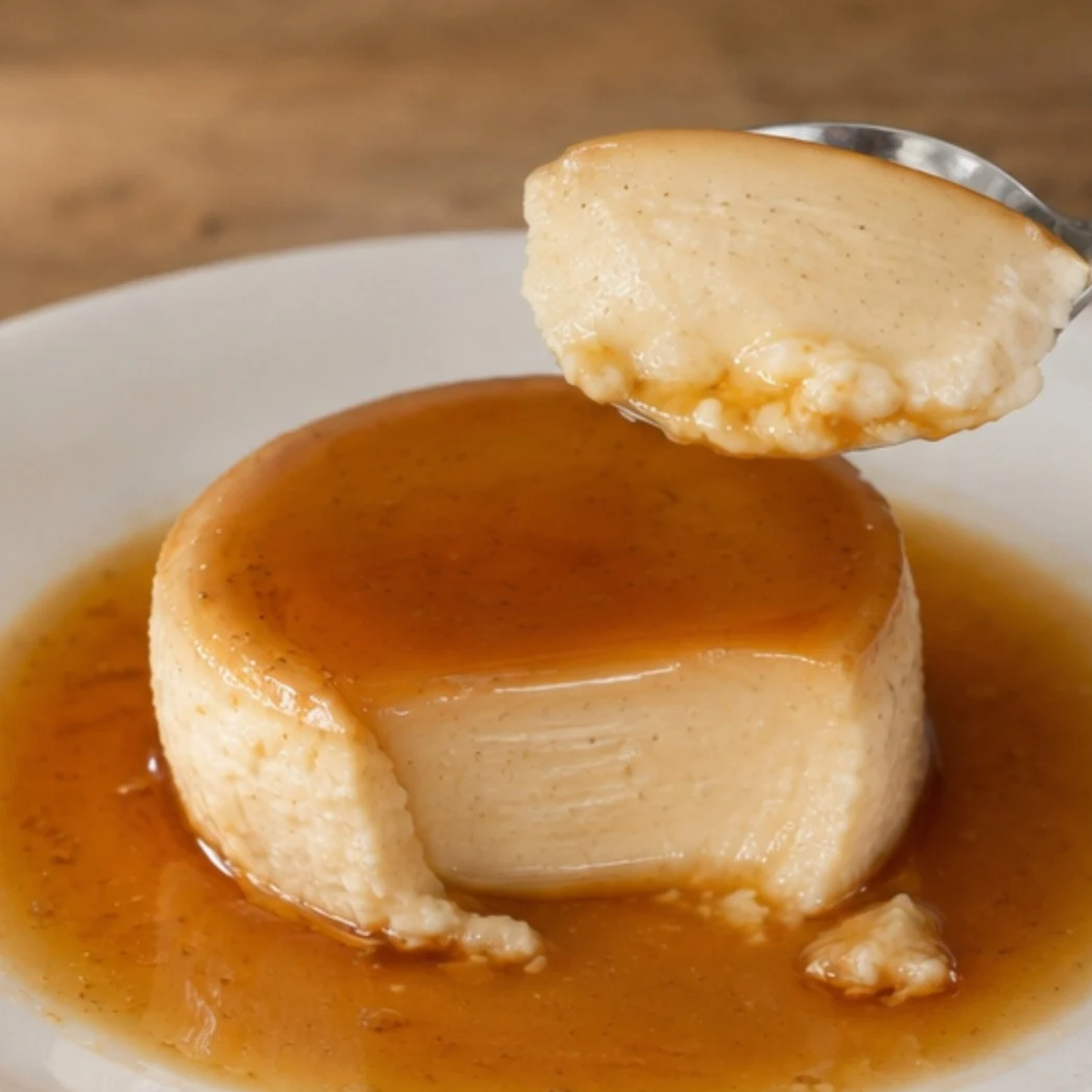
This vanilla crème caramel is a timeless French classic, brought to life with Madagascar vanilla extract: a silky, melt-in-the-mouth custard crowned with a deep amber caramel.
Serves: 6
Baking: 35 min
Resting: 6 hrs minimum
Products used:
Caramel
Ingredients
- 200 g caster sugar
- 60 g water
Method
- Combine the caster sugar and water in a heavy-based saucepan.
- Cook over a medium-high heat without stirring, simply swirling the pan from time to time so that it cooks evenly.
- Continue cooking until you obtain a dark amber caramel, around 175–180 °C.
- Immediately divide the caramel between the 6 metal moulds.
- Quickly tilt each mould to spread the caramel evenly over the base and slightly up the sides.
- Set aside at room temperature until the caramel has fully hardened.
Vanilla custard
Ingredients
- 500 g whole milk
- 500 g whipping cream
- 150 g whole eggs
- 120 g egg yolks
- 150 g caster sugar
- 1 pinch of fleur de sel
- 17 g Madagascar Planifolia vanilla extract L400 with seeds
Preparing the custard base
- Preheat the oven to 140 °C.
- Prepare a bain-marie by bringing a sufficient quantity of water to the boil.
- In a saucepan, combine the whole milk and the cream.
- Heat until simmering, without bringing to a rolling boil.
- In a mixing bowl, combine the whole eggs, yolks, sugar and fleur de sel with a whisk.
- Mix without over-whisking, to limit the amount of air incorporated.
- Gradually pour the hot milk and cream mixture over the egg mixture in a thin stream, whisking gently, to temper it progressively.
- Add the vanilla extract and stir gently.
- Strain the mixture through a fine chinois, then strain it a second time to obtain a perfectly smooth preparation.
- Carefully remove any foam or bubbles from the surface.
Filling the moulds
- If necessary, allow the mixture to cool slightly.
- Gently pour the mixture into the caramelised moulds over the back of a spoon, so as not to disturb or hollow out the caramel.
- Fill the moulds evenly.
Baking in a bain-marie
- Place the moulds in a sufficiently deep, rimmed dish.
- Place in the oven.
- Carefully pour the boiling water into the dish until it comes about halfway up the moulds.
- Bake at 140 °C for about 35 minutes, depending on the size and material of the moulds.
- Check for doneness: the edges should be set while the centre keeps a slight wobble.
- Checkpoint: avoid overbaking. Too high a temperature or too long a bake will give a grainy, less silky texture.
Cooling and setting
- Carefully remove the moulds from the bain-marie.
- Leave to cool at room temperature on a wire rack.
- Cover with cling film and refrigerate for at least 6 hours, ideally overnight.
- This stage allows the custard to finish setting and the caramel to gradually liquefy.
Turning out
- Take the custards out of the fridge just before plating.
- Carefully run the blade of a thin knife between the custard and the side of the mould to gently loosen the edges.
- Place a chilled serving plate on top of the mould.
- Invert in one swift, controlled movement.
- Lift the mould gradually so that the custard releases naturally.
- Check that the caramel has spread evenly around the custard.


